Moosfluh starts to slide
When the Aletsch Glacier thinned below a critical level, the valley flank it had been holding up accelerated to 80 cm a day.
Date2016-09-15
Speed before≈ 0.2 cm/day
Speed 2016up to 80 cm/day
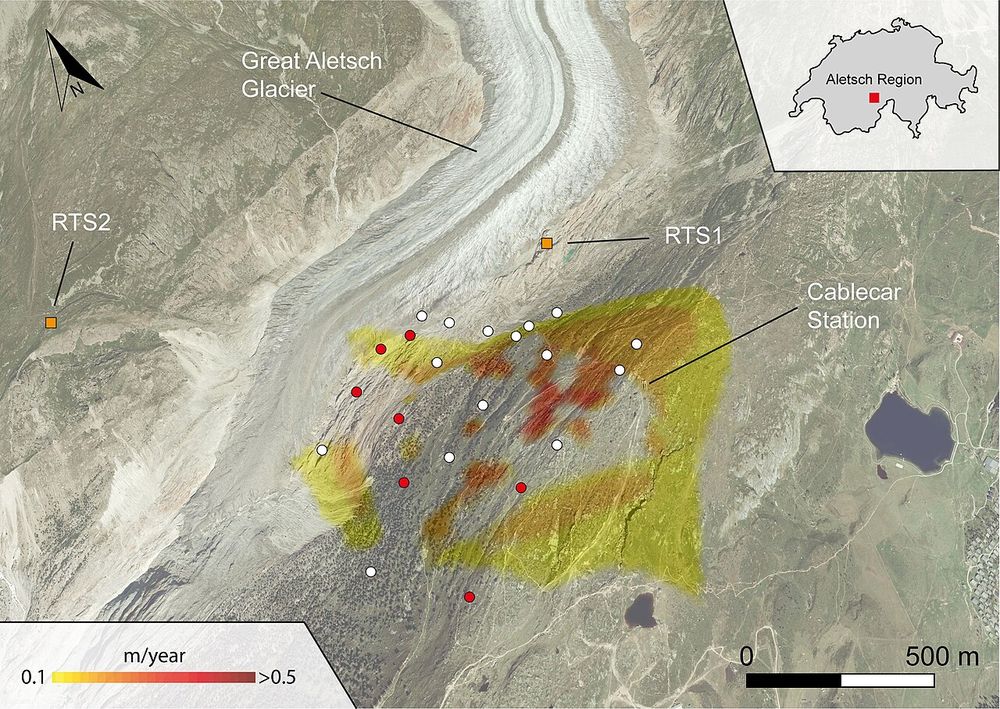
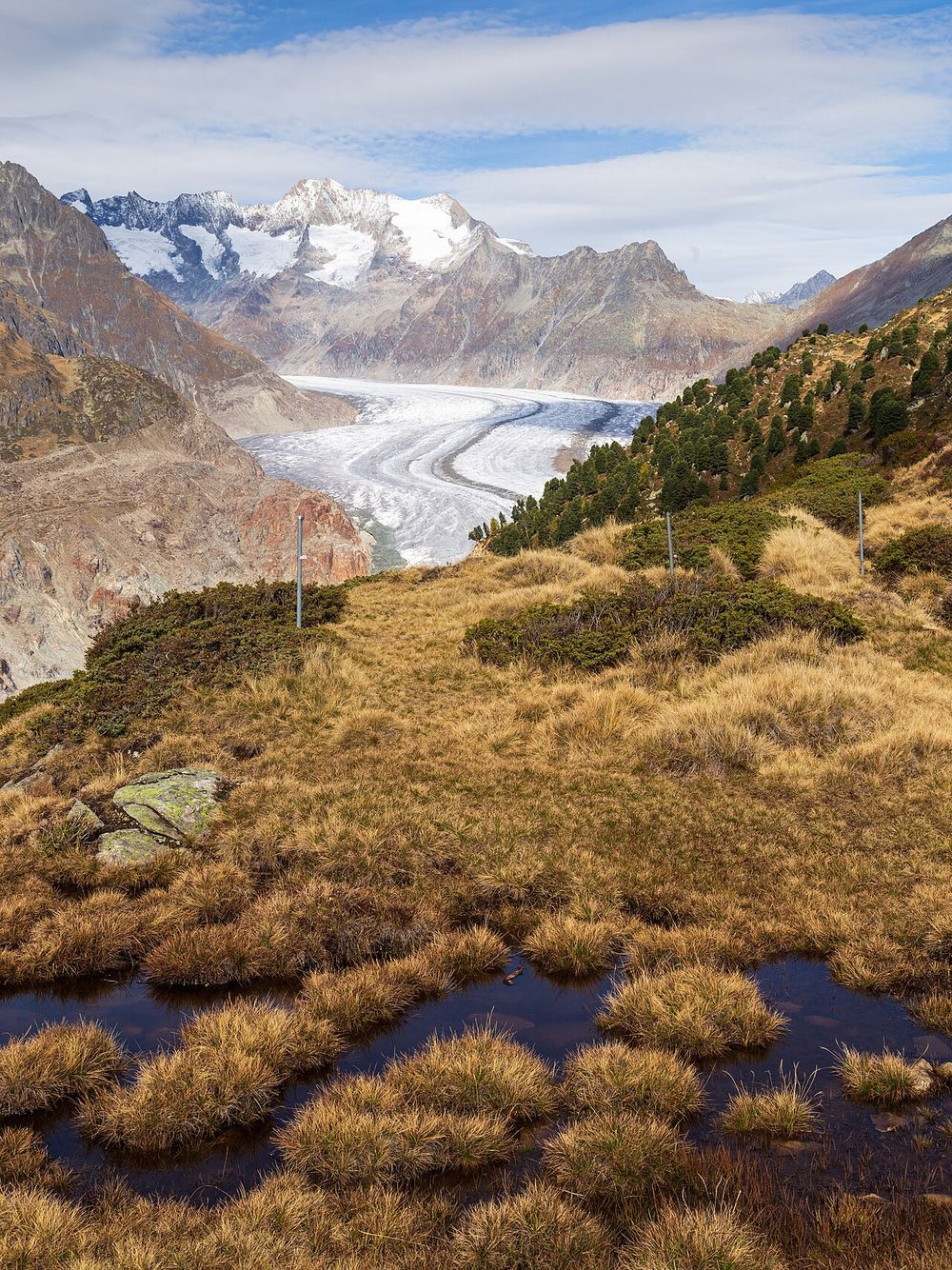
The Moosfluh is a deep-seated landslide on the flank of the Great Aletsch Glacier, just below the resort of Riederalp. For decades the slope crept a few millimetres a day.
In autumn 2016 it accelerated dramatically, from about 0.2 cm to as much as 80 cm per day. Researchers tied the acceleration directly to the thinning of the glacier: as the ice at its foot disappeared, it stopped supporting the slope. Geologists call this debuttressing.
Hiking trails were closed and the slope was monitored with radar. The movement slowed after 2017.

.jpg)
Glaciers
Sources
Sources
- Kos et al. (2016). Contemporary glacier retreat triggers a rapid landslide response, Great Aletsch Glacier. Geophysical Research Letters. agupubs.onlinelibrary.wiley.com/doi/full/10.1002/2016GL071708