Switzerland had 1,788 km² of glacier ice in 1850. In 2016 it had 961, and about 714 in 2026. How much survives the century is still being decided.
Glacier area in 1850 · compared with 2016
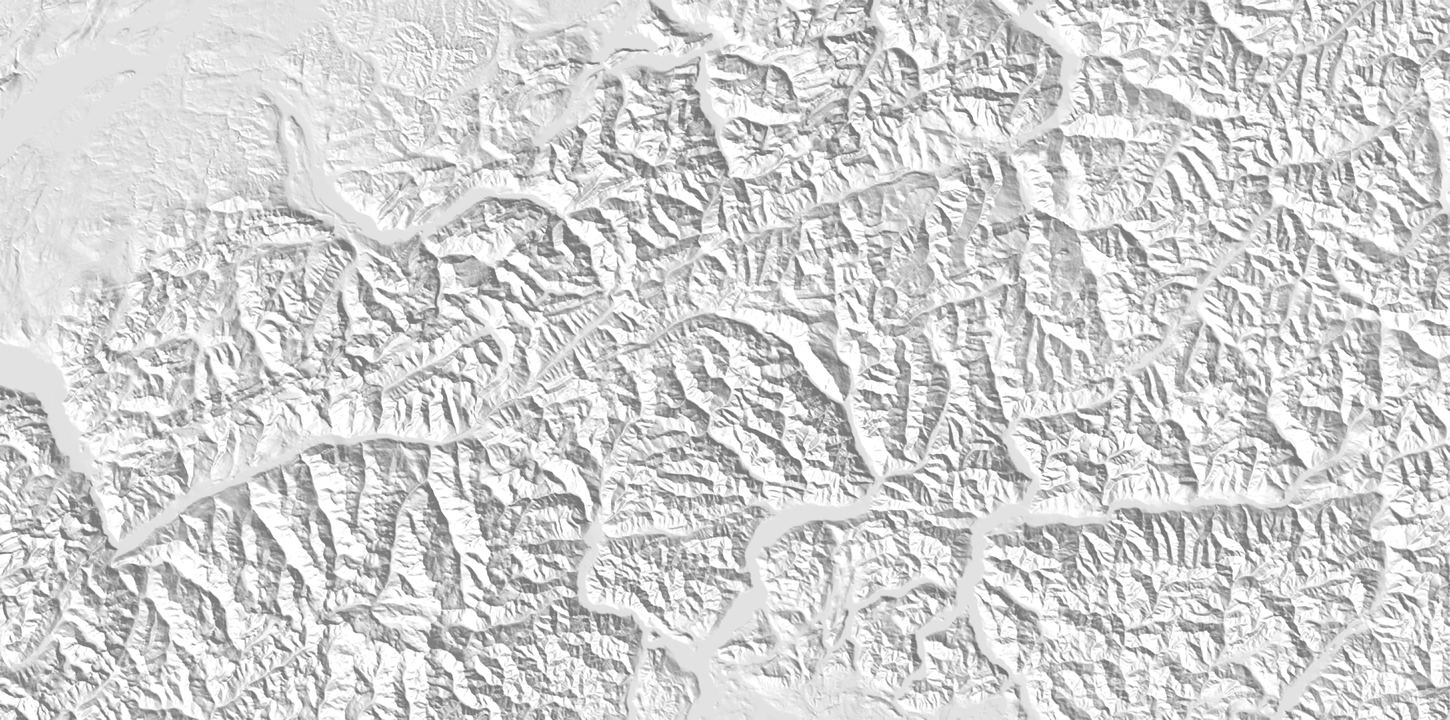
Past extents come from the Swiss Glacier Inventories of 1850, 1931, 1973 and 2016. Future extents are illustrative: each glacier’s projected area (OGGM, median of CMIP6 climate models) is removed from its lowest ice upward. From 2017 to 2026 the national map follows GLAMOS’ yearly area estimates (714 km² in 2026); after that each scenario continues from there at its modelled rate of loss. About the scenarios.
Faster every decade
Swiss glaciers lost 10% in the 1990s, 14% in 2000–2010 and 17% in 2010–2020. In the ten years to 2026 it was 27%.
The worst years are all recent: 2022 (−5.9%), 2026 (−5.5%) and 2023 (−4.4%). About 42.6 km³ of ice is left.
Eight ways in
All glaciers
1,400 glaciers, 690 with their own page: outline since 1850, measurements, projections.
ScenariosThe future
Four emission scenarios, from about a fifth of today’s ice in 2100 to almost none.
HazardsDangers
Ice avalanches, lake outbursts and rockfall, from Giétro 1818 to Blatten 2025.
ImpactsWhy it matters
Water, hydropower, tourism, ecosystems, heritage and sea level.
LandscapeNew lakes
1,192 lakes have formed where the ice retreated since 1850.
HistoryYear by year
Every measured year since 1880, the advances of the 1920s and 1980s, and the record losses.
PlacesCantons
From Valais, with two thirds of all Swiss ice, to Appenzell’s last patch.
WaterRivers and seas
Swiss meltwater flows to four seas: the North Sea, the Mediterranean, the Adriatic and the Black Sea.
The big twelve
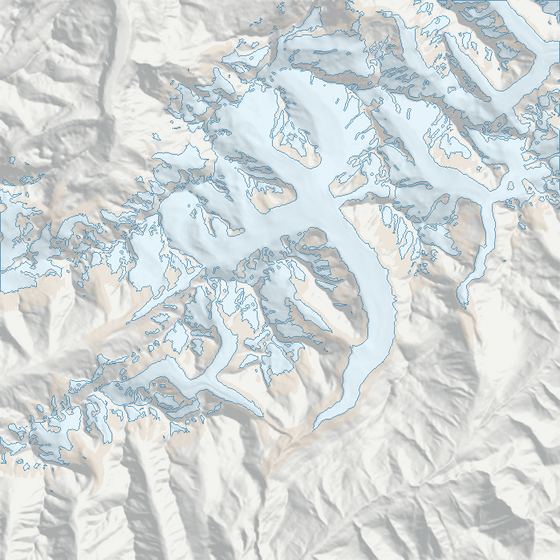
Grosser Aletschgletscher
Great Aletsch Glacier
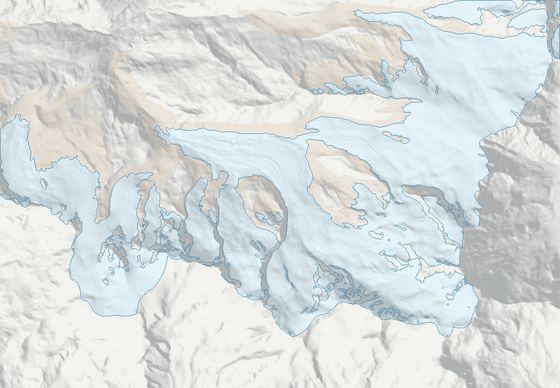
Gornergletscher
Gorner Glacier
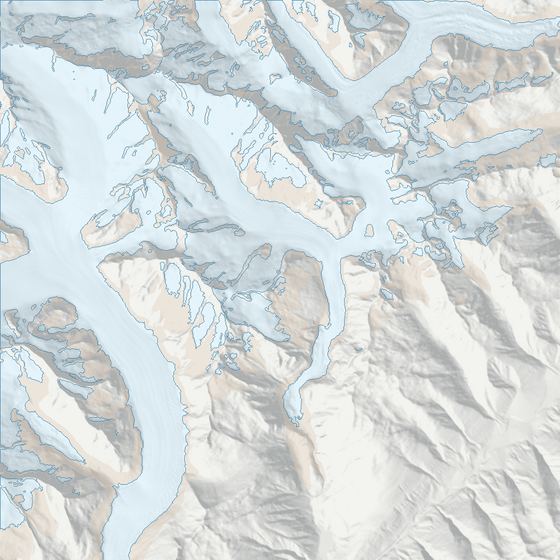
Fieschergletscher E
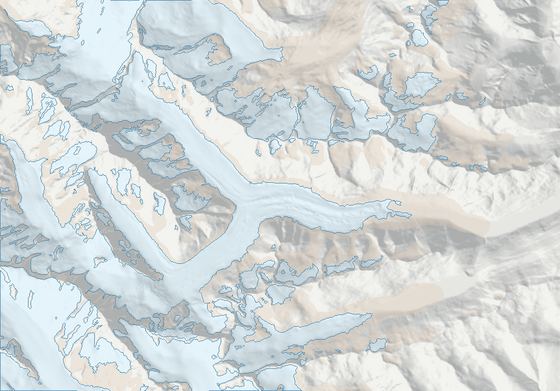
Unteraargletscher
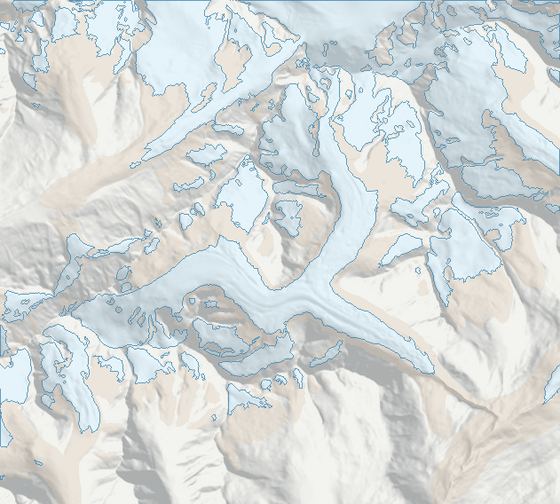
Oberaletschgletscher
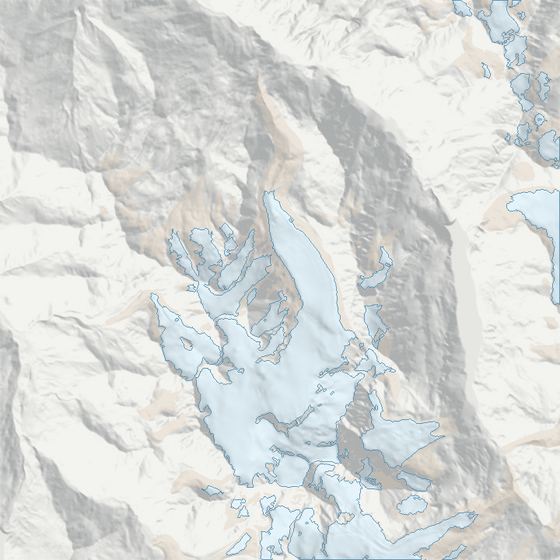
Glacier de Corbassière
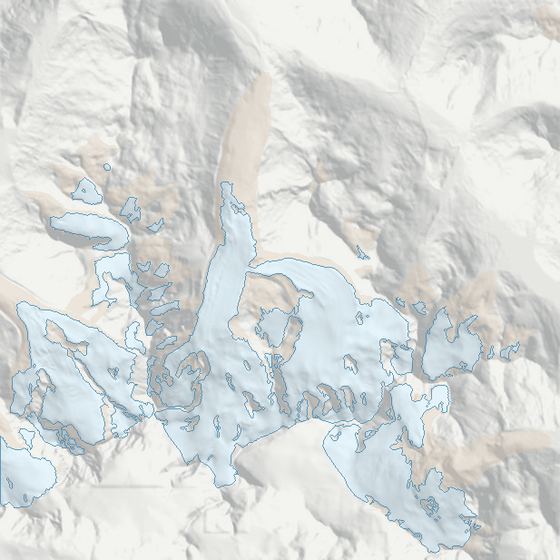
Vadret da Morteratsch
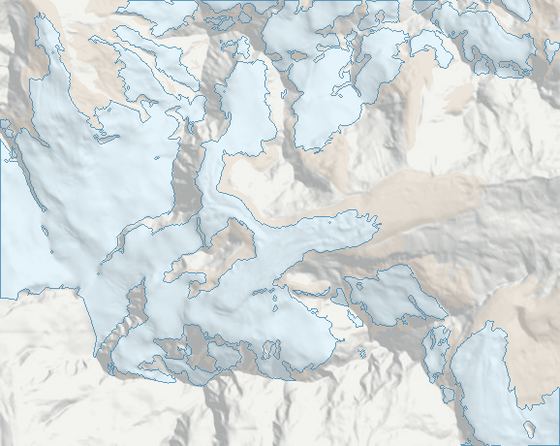
Zmuttgletscher
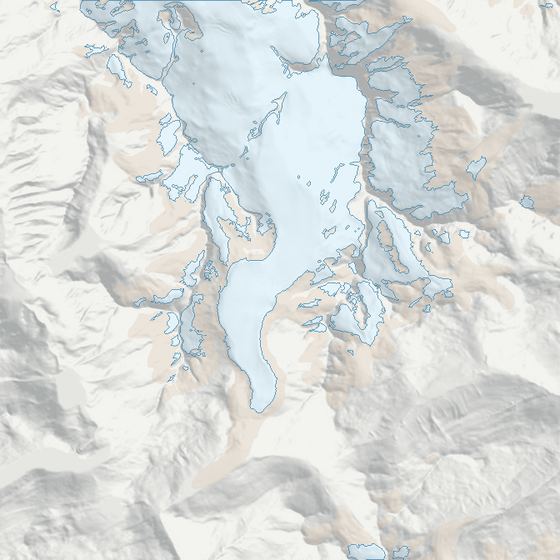
Rhonegletscher
Rhône Glacier
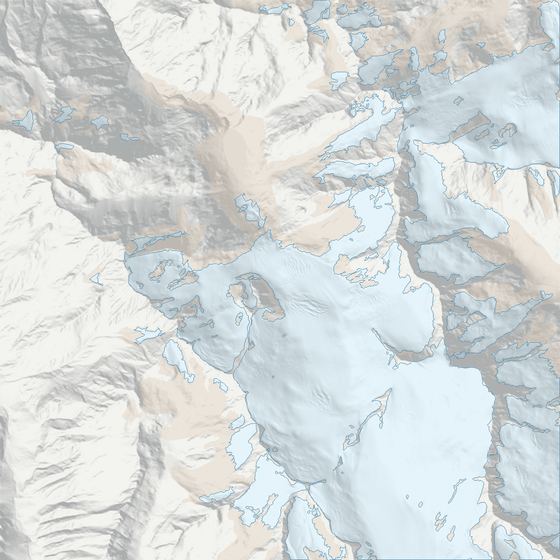
Triftgletscher
Trift Glacier
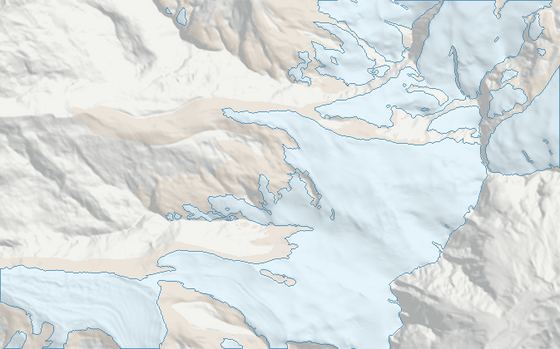
Findelgletscher
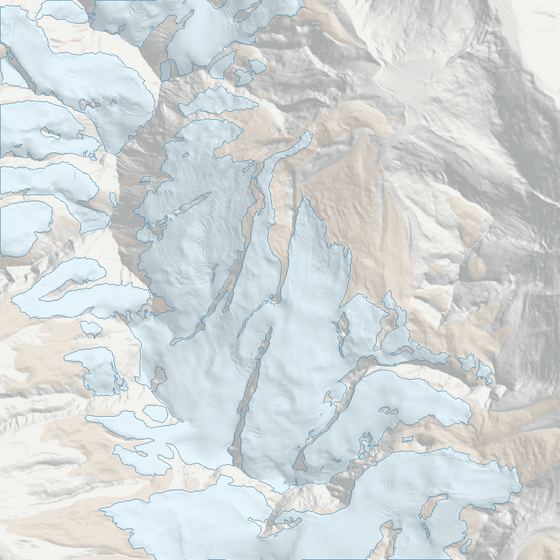
Feegletscher zentral
The Rhône Glacier
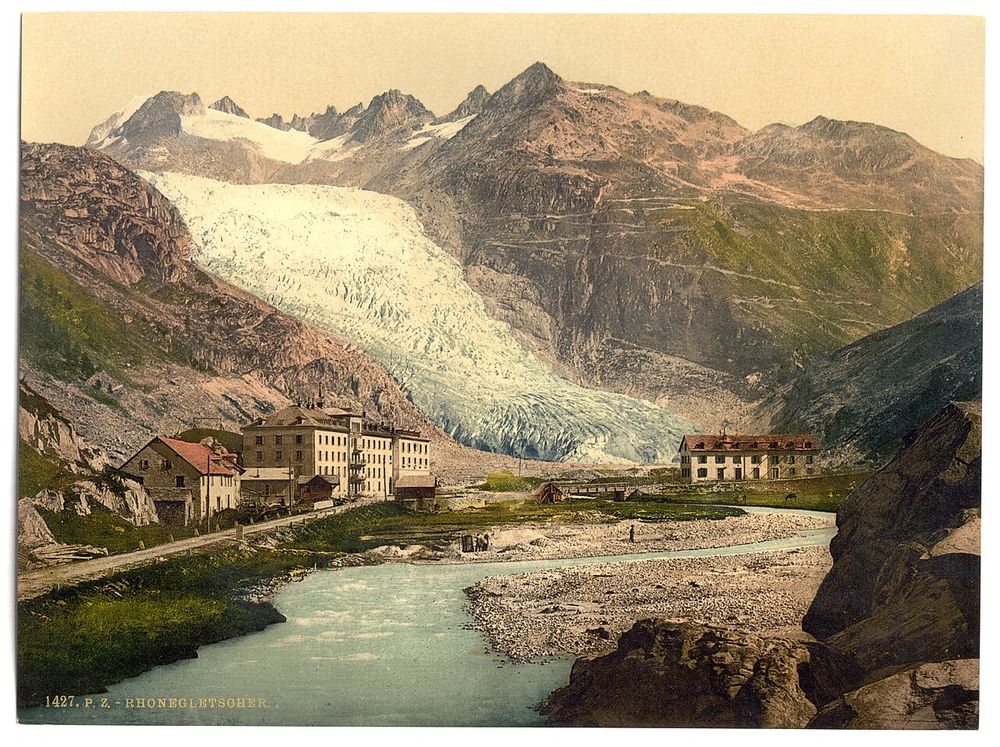

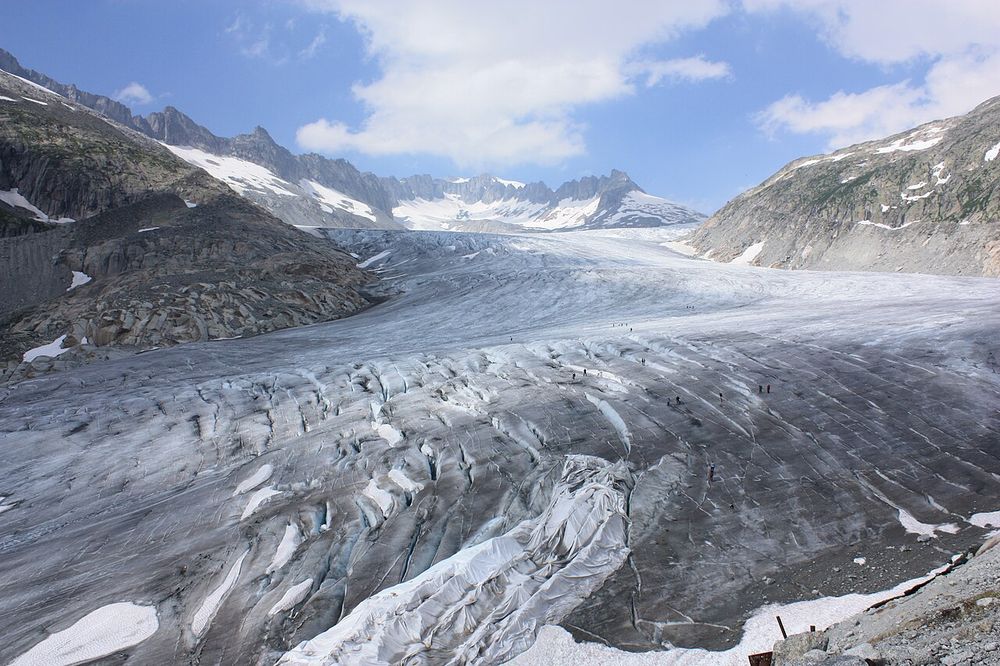

A century apart, the same valley. The tongue that once reached the hotel at Gletsch has withdrawn up the rock step. The Rhône Glacier from 1850 to 2100 →
Lately
The second-worst year
The hottest summer on record: Swiss glaciers lost 5.5% of their ice in one year, second only to 2022.
A quarter in ten years
Another 3% gone in 2025. Since 2015 Switzerland has lost a quarter of its glacier ice.
Blatten
Rockfalls overloaded the Birch Glacier until it collapsed. Rock and ice buried most of the village of Blatten, which had been evacuated nine days before.
Piz Scerscen
About a million m³ of rock and ice fell from Piz Scerscen and ran some 5 km down the Tschierva Glacier.
The glacier vote
A popular initiative named after the glaciers led to a law that sets net zero emissions by 2050. Voters approved it with 59%.